Hookers Green
Paint samples from my Color Journal
When thinking about what color to explore next, I looked at the table next to me and saw half a dozen variations of green, from my water bottle and mug to the various plants on the table. It was such a small slice of the world, yet replete with varying tints and shades of green.
All the greens on such a small table
It got me noticing green. How many shades of green are in the kitchen? The living room? Walk outside and notice the variety of greens in the yard. Zoom in on some foliage in a flowerpot and notice the differences amongst the same plant depending on where the light hits. While waiting at the doctor’s office, wrapped in paper garments, no phone available, I counted green. A dozen different greens from the wall art to the signage caught my eye before the doctor arrived.
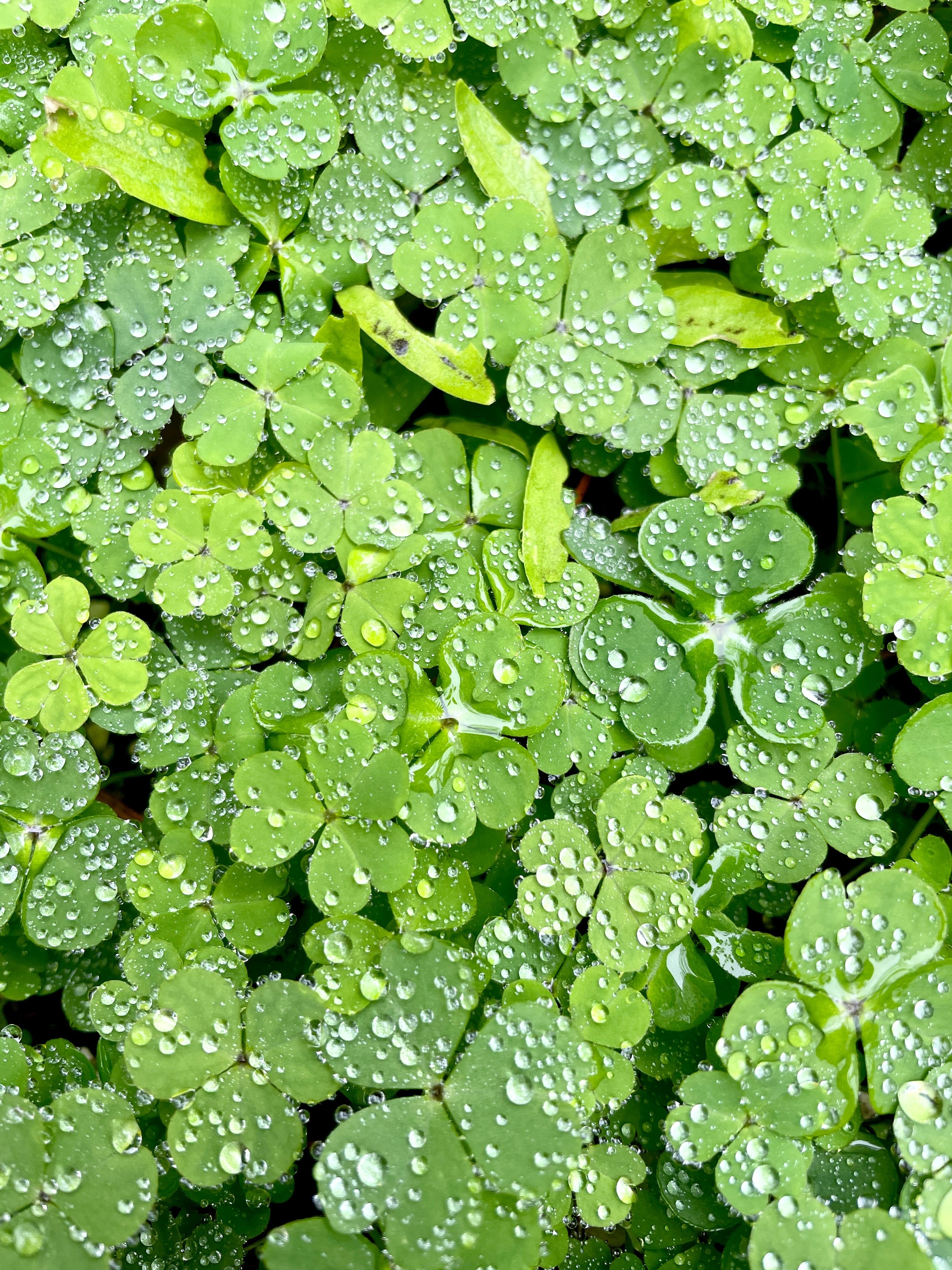
Early morning dew atop green foliage
I’ve been using Hookers Green a lot more lately. I find it makes a fabulous turquoise when mixed with Phthalo blue green shade, and some titanium white and gray. Thinned out, it makes for cool and moody washes. Applied on its own, it becomes much darker, almost bordering on black. Add a little titan buff and you have a soft, muted backdrop on which to arrange bright pops of complementary color. Mix in some yellow, and you can feel the sun hitting the foliage.
Fun fact: William Hooker, a botanical illustrator, created this namesake color in order to better express the color of leaves. He used Prussian blue and Gamboge (a deep yellow). He was the first official artist of the Royal Horticultural Society, and you can see more of his illustrations here.
I’m using Golden Acrylics heavy body Hookers Green Hue, and interestingly, this variation is made with all three primaries: Nickel Azo Yellow (PY150), Indanthrone Blue (PB60, and Quinacridone Magenta (PR122). That explains why it looks so nearly black on its own. Hookers Green featured heavily in my mixed media In Bloom series.
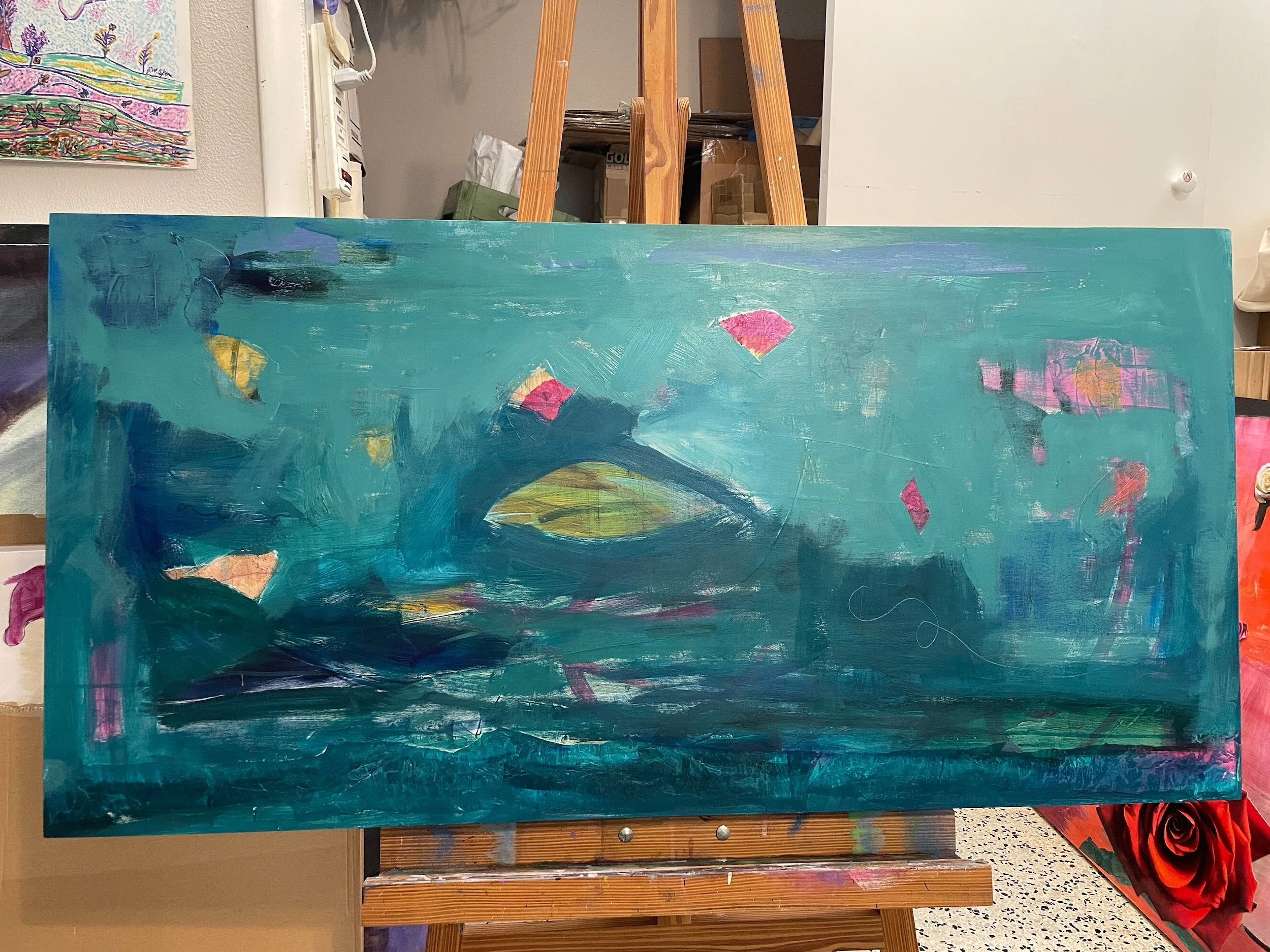
Early stages of Mums in Orbit (2025), acrylic and hand-dyed tissue paper on 24'“ x 48” wood panel.
There are plenty more shades of green out there! I encourage you to take the time to notice. Pick a room, a location, whatever, and start counting. Share how many greens you encountered in the comments below, and if you’d like, where you encountered them. You can also tag me on Instagram @michellenagri or use the hashtag #MyColorJournal. Thanks for reading!